Medical Grade Compression vs Regular Compression: What's the Difference and Why Does It Matter?
, by Bearhug, 7 min reading time
, by Bearhug, 7 min reading time
 Walk into any sports shop or scroll through Amazon and you'll find dozens of compression socks and supports. They all look broadly similar. Many of them make similar claims. But there's a fundamental difference between compression products that are genuinely medical grade and those that simply use the word "compression" as a marketing term - and that difference has a real impact on whether the product actually does what you need it to do.
If you're dealing with an injury, managing a chronic condition, or trying to support your body through serious training, understanding that difference matters.
Medical grade compression refers to products that deliver a clinically defined, consistent level of graduated pressure - measured in millimetres of mercury (mmHg) - and are manufactured to meet recognised medical or regulatory standards.
Graduated compression means the pressure is highest at the point furthest from the heart and decreases as it moves up the limb. This gradient is what drives the therapeutic benefits: it actively assists blood flow back toward the heart, reduces venous pressure, and limits fluid accumulation in the tissue.
For a product to be classified as medical grade compression, it typically needs to meet one of the recognised compression standard frameworks. In the UK and Europe, the most widely referenced is the British Standard (BS 6612) and the European RAL-GZ 387 standard, which classify compression into four grades based on mmHg levels:
To achieve these classifications, the compression profile of the product has to be measurable, repeatable, and verifiable. That requires precise knitting technology, quality-controlled materials, and manufacturing processes that can consistently hit and hold target pressure levels across production runs.
Regular or consumer-grade compression products - the kind you find in most sports retailers and general marketplaces - are not required to meet any specific pressure standard. They provide some level of compression, but the actual mmHg delivered is rarely specified, independently verified, or consistent between products or even between units of the same product.
This isn't to say consumer compression is useless. For general warmth, mild proprioceptive feedback, or the psychological comfort of feeling supported during exercise, it can be perfectly adequate. But if you need compression to perform a specific clinical or therapeutic function - reducing inflammation, managing oedema, supporting venous return, or aiding recovery from a musculoskeletal injury - you need to know you're getting a consistent, calibrated level of pressure. Consumer grade products simply can't guarantee that.
The materials matter too. Medical grade compression typically uses carefully selected yarn combinations - often elastane or spandex blended with nylon or cotton - that are engineered to maintain their pressure profile through repeated washing and wear. Many cheaper consumer products use lower-grade elastics that degrade rapidly, meaning the compression they provide diminishes significantly after just a few washes.
The clinical research on compression is largely built around medical grade products at defined mmHg levels. When studies show that compression reduces post-exercise muscle soreness, speeds recovery from injury, or improves performance in endurance athletes, they are almost always testing products with specified, verified pressure levels - not generic sports supports from a retail shelf.
This matters if you're trying to make sense of the evidence. A study showing benefits from 20-30 mmHg graduated compression doesn't tell you anything useful about a generic support with no stated pressure rating. You can't assume the benefit transfers.
This is one reason why medical professionals - physiotherapists, sports medicine doctors, orthopaedic consultants - tend to recommend specific classes of compression rather than just telling patients to "wear a compression support." The class and the pressure level are what determines the therapeutic effect.
Injury recovery. Whether it's a sprained ankle, a knee injury, shin splints, or tennis elbow, the inflammatory response involves fluid accumulation and increased pressure in the tissues around the injury site. Medical grade compression applies counter-pressure that limits this swelling, supports venous and lymphatic drainage, and creates a better mechanical environment for healing. Generic compression may provide some benefit, but the effect is less predictable.
Post-surgical recovery. After joint surgery or soft tissue repair, medical grade compression is routinely prescribed for this reason. The pressure levels are specified because the clinical outcomes depend on them.
Chronic conditions. For conditions like lymphoedema, varicose veins, or chronic venous insufficiency, medical grade compression isn't optional - it's the primary management tool. Consumer products are not appropriate here.
Serious sport and training. For athletes training at high volume or intensity, the recovery window between sessions is critical. Medical grade compression worn in the hours after a hard session has a measurable effect on reducing delayed onset muscle soreness (DOMS) and restoring muscle function faster. The effect is real, but it depends on getting the pressure right.
Proprioception and joint stability. Properly calibrated compression improves the brain's awareness of joint position (proprioception), which is especially important after injury when proprioceptive signals are disrupted. The consistent, firm pressure of a medical grade product provides better sensory input than a loose or variable-pressure consumer support.
Look for mmHg ratings. A medical grade product will state its compression class and/or the mmHg range it delivers. If a product has no pressure rating, it isn't making a medical grade claim.
Check for standards compliance. Look for references to recognised compression standards (RAL-GZ 387, BS 6612, or equivalent). This means the product has been tested and verified against an external benchmark, not just described as "compression" by its manufacturer.
Consider the construction. Flat-knit and circular-knit are the two main construction methods. Flat-knit products are typically used for custom-fitted medical compression. Circular-knit products - including most high-quality compression supports and socks - can absolutely be medical grade if manufactured to the correct specifications, but the quality of the knitting matters enormously.
Think about fit. Medical grade compression needs to be sized correctly to deliver its rated pressure profile. A product that comes in only two or three generic sizes is unlikely to be delivering consistent, calibrated compression across a wide range of limb sizes. Proper sizing is part of what makes medical grade compression medical grade.
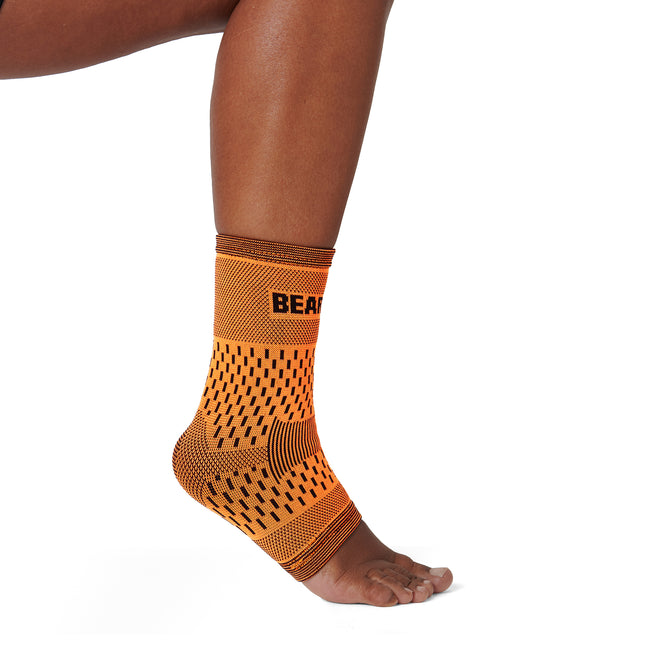
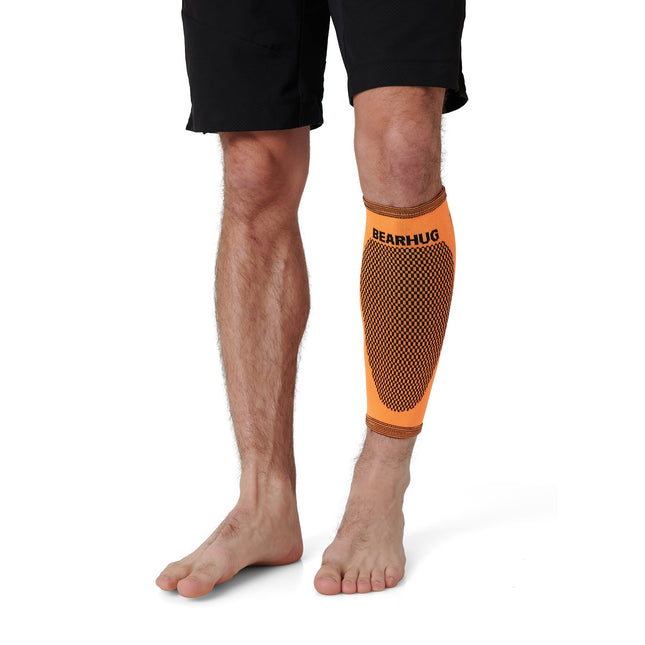
Bearhug supports are built to medical grade compression standards. That means the pressure you get isn't a guess - it's engineered into the product from the yarn selection and knitting specification through to quality control in manufacture.
Every Bearhug support is designed to deliver consistent, graduated compression in the therapeutic range, with anatomical shaping that ensures the pressure profile sits correctly on the joint or limb it's designed for. The result is support that actually does what compression is supposed to do - not just something that feels vaguely tight.
If you've worn generic compression before and felt like it didn't make much difference, that's often the reason. The product wasn't delivering enough consistent pressure to trigger the physiological responses that make compression therapeutically effective. Medical grade compression, worn correctly and sized properly, is a different experience.
"Compression" covers a huge range of products, from high-quality medical grade supports to basic elasticated tubes with no measurable therapeutic value. The difference lies in the precision of the pressure delivered, the consistency of that pressure across the product's lifespan, and whether the product has been manufactured and tested to a recognised standard.
For casual use or mild support, consumer grade compression may be sufficient. But if you're managing an injury, recovering from surgery, dealing with a chronic condition, or serious about optimising recovery from sport, medical grade compression is worth understanding - and worth seeking out.
Explore the full range of Bearhug medical grade compression supports - designed for recovery, performance, and long-term joint health.